
Silicone adhesives and sealants play a significant role in industrial production, maintenance and repairs.
The growing demand for silicone adhesives and sealants is partly due to the increasing need for UV and high-temperature-resistant household appliances.
Consequently, silicone adhesives and sealants have earned a permanent place in the toolkit of manufacturers and maintenance staff across every industrial sector.
Here we answer the most frequently asked questions about silicone adhesives and sealants.
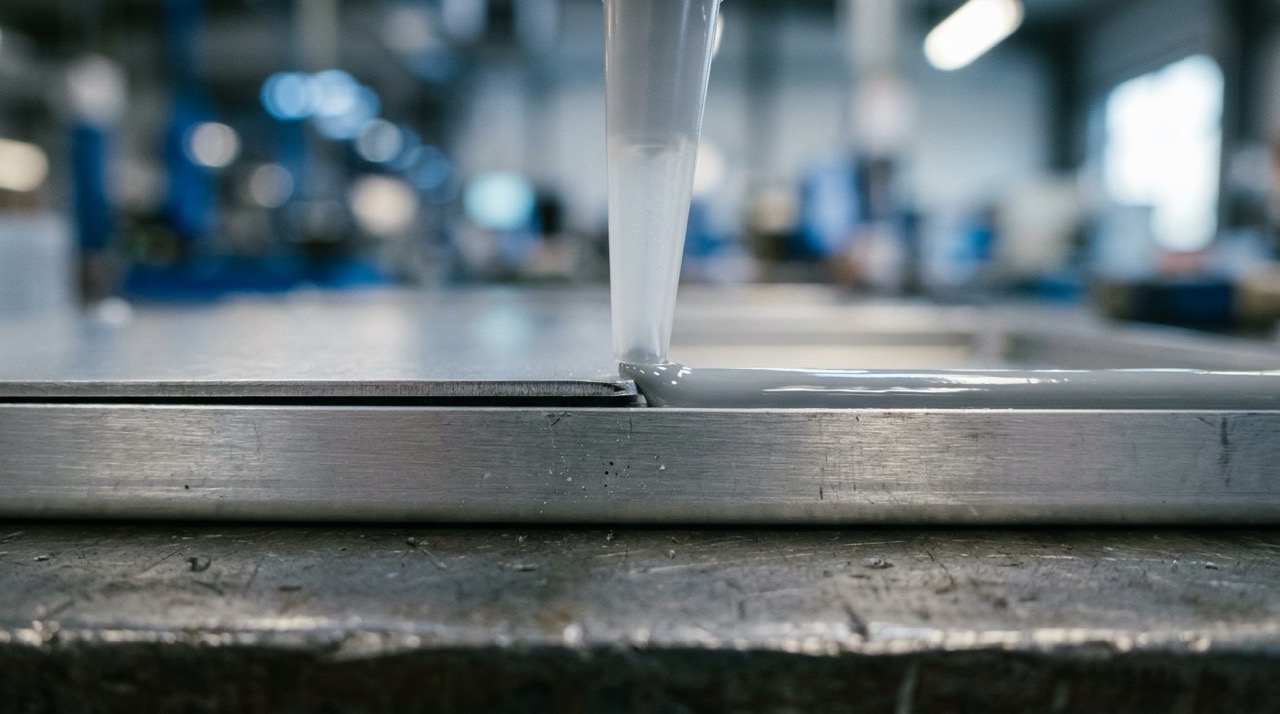
What are the advantages of adhesives and sealants?
Silicone adhesives and sealants, such as those supplied by DOWSIL, a partner of MD
Poland, offer several unique advantages, including:
- Wide temperature range: they can be used from -65 °C to 232 °C (once fully cured).
- Non-toxic: safe for contact with food, for use by children and for everyday applications.
- Weather-resistant: provide protection against rain, sleet, snow, ultraviolet (UV) radiation and ozone.
- Good adhesive strength: ensure reliable bonding to a variety of substrates.
- Low flammability: low fire risk; fully flame-retardant solutions are also available.
- Good dielectric properties: capable of dissipating or storing electrical energy over a wide temperature range.
- Good chemical stability: prevents premature failure and ensures bonding reliability.
- High flexibility: ideal for use on diverse and complex substrates.
- Stress relief: they absorb stress and protect components.
- Rapid curing: they allow for quick application with the option of automated dispensing.
- Electromagnetic protection: prevents electromagnetic interference.
- Environmental sustainability: eco-friendly solutions, compliant with the regulatory framework of the Responsible Care® Pollution Prevention Code.
Where can silicone adhesives and sealants be used?
Silicone adhesives and sealants can be used in many industrial sectors, including:
- bonding of different substrates
- sealing of materials against external hazards
- electronic protection
- thermal protection
- bonding and encapsulation.
What are the most common applications of silicone adhesives and sealants?
The most common applications in which silicone adhesives and sealants play an important role include:
- industrial ovens,
- lighting,
- electronics,
- windows,
- HVAC,
- pipes,
- air intakes,
- fridges,
- shop windows,
- automotive,
- food industry.
What are the different types of silicone adhesives and sealants?
Silicone adhesives and sealants are generally available in the following types:
- Adhesives: used to bond materials together.
- Sealants: used to seal materials against external hazards.
- Encapsulants/gels: used for filling and encapsulation.
- Conformal coatings: used to protect against abrasion.
- Foams: used for assembling and sealing components.
How do I choose a silicone adhesive or sealant for my application?
Important factors to consider when choosing silicone adhesives and sealants are:
- Substrate material: porous or non-porous.
- Type of curing required: heat-curing, room-temperature curing, pressure-curing.
- Required hardness/modulus: hard or soft coatings.
- Required bond strength: some silicone adhesives offer greater bond strength than others.
Other required properties: flammability, dielectric properties, temperature range and weather resistance.
As a general rule, the benefits of silicone adhesives and sealants will be maximised when these specifications match those of the application as closely as possible.
However, it is important to discuss your application with an expert before choosing a silicone adhesive or sealant.
Do silicone adhesives and sealants require surface preparation before application?
It is generally recommended to clean and prepare the surfaces of substrates for bonding or sealing before applying a silicone adhesive or sealant.
- Porous surfaces may be lightly sanded to ensure a uniform bonding surface.
- Non-porous surfaces, such as metals, glass and plastics, can be cleaned using a low-lint cloth.
- Read our comprehensive guide on surface preparation for bonding to find out more about this topic.
Can paint be applied over silicone adhesives and sealants?
Generally, silicone adhesives or sealants do not allow paint to adhere.
However, they are available in a range of colours, which allows them to be used in applications requiring specific colours, such as where the sealant is visible on the final product.
Are primers required for bonding with silicone adhesives and sealants?
Many silicone adhesives can be applied without the use of a primer.
Primers, however, can be used with silicone adhesives to bond materials that are particularly difficult to bond. Primers can improve the bond quality and speed of room-temperature-curing silicone sealants on a variety of common non-porous substrates.
As a general rule for adhesives and sealants, we always recommend proper surface cleaning and preparation before applying an adhesive or sealant. Proper surface cleaning and preparation removes contaminants such as dirt, moisture, grease and other substances, thereby preventing adhesion problems between the adhesive or sealant and the substrate.
Find the DOWSIL silicone solution best suited to your application
Choosing the most suitable silicone adhesive or sealant depends on the materials, operating conditions and performance requirements of each application.
MD Poland offers a range of DOWSIL silicone adhesives and sealants for various industrial applications. Contact our experts for more information about your specific requirements, to identify the most suitable solution and to find out which DOWSIL products are available from MD Poland.

